


Category: Air Quality

Indoor Air Quality a Rising Concern For Home Buyers

Many potential home buyers are actively looking to relocate in the spring and summer months, and this makes the warmer months of the year a very busy time for the real estate market. If you have decided to buy an existing home or build your dream home, indoor air quality is something that should be a priority. There are ways you can ensure that your future home is healthy and safe for all the members of your family by dealing with these concerns before you make a buying decision. Indoor Air Concerns for New Home Buyers When you decide to purchase a new home, you give yourself the best opportunity to ensure that your indoor air quality is healthy. During the past 10 years, home builders have noted that consumers have been asking for “green” building materials more often. They want to buy homes built with flooring, cabinet materials and other products that are environmentally sustainable and free from dangerous chemicals. Bamboo is a popular choice for flooring, and it is an example of an environmentally friendly building product. Reclaimed oak, which is usually found locally, is another one, and is a better choice than traditional oak for flooring when

Read More »

Extreme Weather Can Affect the Air in Your Home

Extreme weather events can negatively impact indoor air quality, which may lead to serious health consequences. With weather events such as heat waves, storms and floods increasing in recent years, air quality should be on every homeowner’s radar. Higher Temperatures Bring Air Quality Problems Intense heat waves can make it miserable to be outdoors, but it can also create problems for those who stay indoors. Heat may trigger various events that threaten indoor air quality. Heat increases the production of pollen, which gets into the air both indoors and outdoors. A good air filter should remove most of the pollen from your indoor air, but a significant increase in the overall amount of pollen will increase the amount that makes it through the filter and into your home. Rising temperatures, and the associated rise in energy costs, inspire many homeowners to improve their weatherization. However, the nature of weatherization—limiting the movement of air between indoors and outdoors—can worsen air quality problems. Super efficient and weather-tight homes rely entirely on mechanical systems for fresh air, and any problems in those systems can send indoor air quality plummeting. Air Quality Threats From Storms and Flooding Violent storms that cause brownouts or blackouts

Read More »

The Importance of Changing Your Air Filter

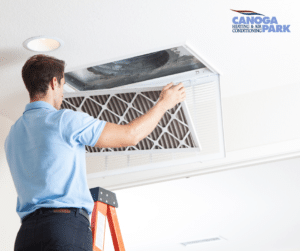
With so many household chores to complete, many people overlook important HVAC maintenance tasks. One crucial objective is to perform an air filter change three to four times per year. Three-inch or smaller filters should be replaced after 90 days; larger units need to be changed every four months. This type of heating and cooling system maintenance can prevent health problems, enhance comfort, reduce air pollution and cut operating costs. Changing Your Air Filter Enhances Energy Efficiency Compared to new filters, grimy units make it considerably harder for air to move through the system. They have the potential to raise fuel or electric power consumption by as much as 15 percent. For example, a dirty air filter could boost a home’s annual cooling costs from $900 to $1,035. Keep in mind that some types of new HVAC filters operate more efficiently than others. Promote System Reliability & Performance The added energy costs associated with a clogged filter are often minimal compared to the repair bills. It may begin to cause mechanical problems after excessive amounts of dirt accumulate on coils or motors. This results in costly service calls, repair work and part replacements. Another problem is that it may force

Read More »

Why You Should Care About Maintaining Your Home’s HVAC

Did you know that your HVAC should be inspected about twice a year? With spring right around the corner, you’ll want your AC to be checked out so you and your family can be as comfortable as possible once the heat hits. Once the colder months of the year roll back around, it is important to make sure that your home’s heater is in proper working order. Neglecting regular maintenance for your HVAC can cause you to run into some costly problems. Be wary of these serious issues that you can run into: Bad air quality in your home It is much more likely that you will experience more sick days during the winter than you would in the summer. This is due greatly to a lowered immune system in the colder months. However, if you are breathing in dirty air due to a heater that isn’t working properly, this will not help you in your efforts to stay healthy. If you regularly maintain your heater, you will have much cleaner air to breathe in your home. Costly repairs that could have been avoided If you were to never change the oil in your car, you would eventually have to invest in a whole new

Read More »
Indoor Air Quality and Covid

Everything We Know About COVID and Indoor Air Quality

Since Spring 2020, the world has been dealing with COVID-19. We now know that COVID spreads via aerosol, and more homeowners in Los Angeles understand the meaning of the term Indoor Air Quality (IAQ). But we’re all learning as we go here, including scientists and researchers. In our quest to continue learning about the industry and how to best protect our team and customers, we’ve reviewed the latest research and recommendations on the topic of Covid and IAQ. Here’s what we’ve learned:  There’s No Silver Bullet: Use Many Methods to Improve IAQ Recent research from the Central Building Research Institute indicates that there is no one, perfect solution for improving IAQ. Instead, the best course of action to improve indoor air quality is using many different methods. Most Los Angeles residents are already familiar with the baseline recommendations. Wearing facemasks, social distancing, and limiting large gatherings are the best ways to keep things safe inside most buildings. One challenge with these recommendations is that it requires every individual to choose to comply. In other words, the quality of everyone’s IAQ depends on… everyone!   There are ways to promote great IAQ, regardless of individual choices. These are called “engineering controls” –

Read More »

What Homeowners Need to Know About Aeroseal Duct Protection

When is the last time you thought about your duct system? Though it may not be at the top of mind, especially during the holiday season, your duct system plays an important role in keeping your home comfortable year-round. If your home feel stuffy and uncomfortable no matter where you set your thermostat, this may indicate that you have a problem with your duct system. Maintenance, cleaning, and sealing can fix all of your issues by improving the quality of your indoor air. At MightyServ, we utilize Aeroseal technology to help protect and optimize your duct system. This allows you to enjoy a more comfortable home environment without worrying about a decline in your indoor air quality. This article will delve a little bit deeper into what Aeroseal Duct Protection is and how it can benefit MightyServ homeowners. What is Aeroseal Duct Protection? Did you know that about 47% of the average home utility bill is spent on heating and cooling the home? What’s more is that typically, 30 cents of every $1.00 spent on heating and air conditioning is wasted on leaky ducts. Sealing your duct work is one of the best ways to reduce energy waste, improve efficiency, and cut down on

Read More »

What is a Hepa Filter?

HEPA stands for High Efficiency Particulate Air. HEPA filters are advanced filters that create cleaner air than traditional air filters. These air filters are tested and approved by The Institute of Environmental Sciences and must trap 99.97% of particulates 0.3 microns or larger in order to be categorized as a HEPA filter. Benefits of a HEPA Filter HEPA filters draw air through them to trap pollutants such as dust, dirt, pet dander, and other harmful particles and pollutants. By installing a HEPA air filter in your home’s heating and cooling system, you’ll trap all the harmful particles that could trigger or worsen asthma or allergy symptoms. Improve Your Indoor Air Quality Switching to HEPA filters in your home is one way to improve your indoor air quality, but it’s not the only way. Change your air filters How often you use your heating and cooling system will determine how often you should change it out, but as a general rule of thumb, you want to change your filter every 30-90 days so that air can filter through unhindered by the dirt, dust, and other particles the filter has picked up. Bring the outdoors inside Keeping plants in your home can

Read More »
Archives

MightyBucks Program